

History of San Felice del Molise
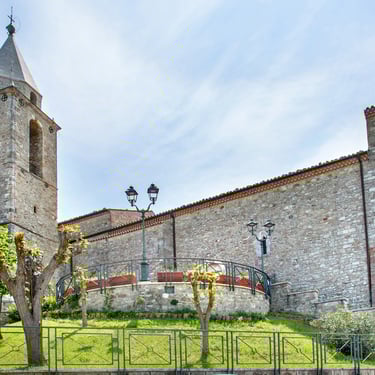
San Felice is mentioned for the first time in the 12th-century Barons' catalog and then in a document from November 1300 concerning King Charles II of Anjou. The parish church dates back to the early centuries after 1000. It has undergone various modifications and renovations over the centuries but has retained many elements of its original Romanesque-Gothic style. Before the unification of Italy, the name was simply San Felice; the adjective “Slavo” was added in 1863 to distinguish it from the many other San Felice towns in Italy. During the Fascist period, on the initiative of the podestà, it became San Felice del Littorio. After the fall of Fascism, in 1949, the current name was adopted.
Historical background and origin of the name

The Croatian linguistic minority and settlement
Together with Acquaviva Collecroce and Montemitro, San Felice constitutes the legally recognized Croatian linguistic minority in Molise (Law 482/1999). Croats arrived in Molise, as well as in Abruzzo and other areas of central and southern Italy, in the early 16th century. Following the earthquake of 1456 and subsequent plagues, these territories were sparsely populated, while groups of people from inland areas gathered on the Dalmatian coast, driven by the Turks who were expanding into the Balkan peninsula. A 1541 report by the Knights of Malta, to whom Acquaviva belonged, states that “a few years ago, some Illyrians, or rather Slavs, had taken refuge there, driven from their homeland by the barbarism of the Turks.” In San Felice, they were welcomed in 1518, with a contract, by Ettore and Pardo Pappacoda, owners of the fiefdom. There are no documents about the precise place of origin of these Slavs. Based on the characteristics of the language, it has been hypothesized (Milan Rešetar) that they came from the territory between the Četina and Neretva rivers.
Language and demographic evolution
The Croatian language, called Na Našu (=ours) by its speakers in San Felice, was well preserved until the first half of the 1900s, when it began to decline as a result of intense emigration abroad and immigration, which began as early as the late 1800s, of new residents from nearby Abruzzo and Fossalto, in Molise. Today, after peaking at 1,700 in 1951, the population has declined dramatically in recent decades and now stands at just over 500, with the language still known only by a minority of residents.
The territory, the town and places of worship
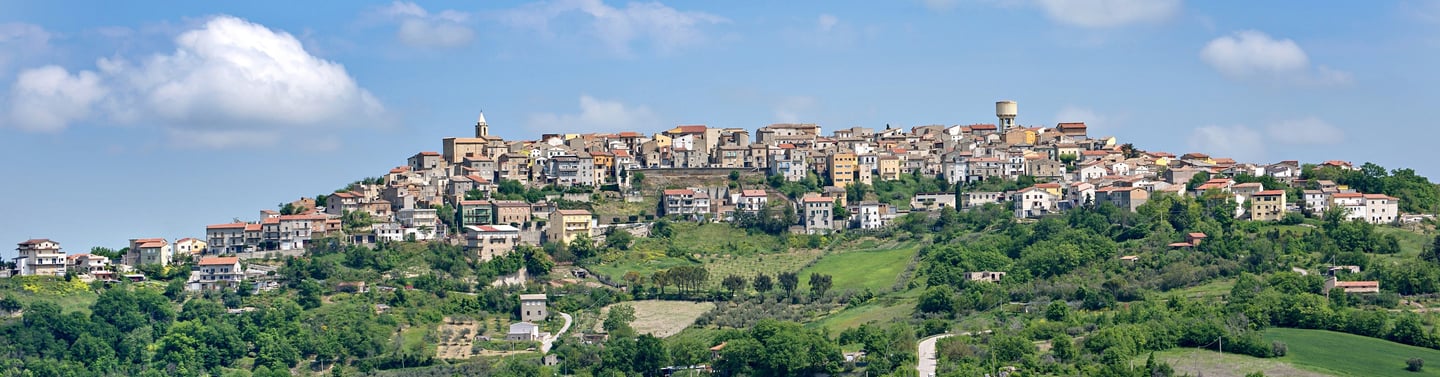
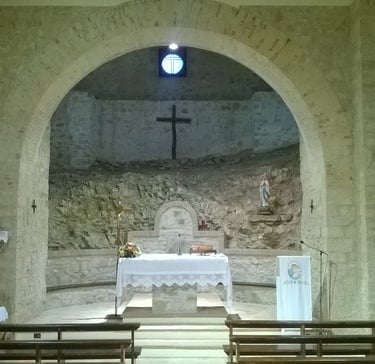
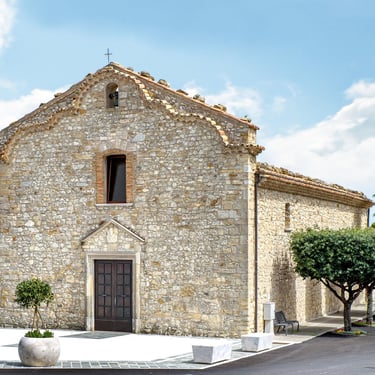
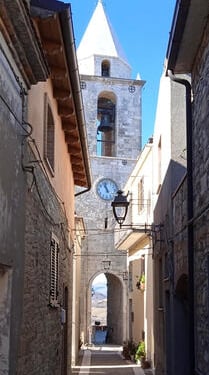
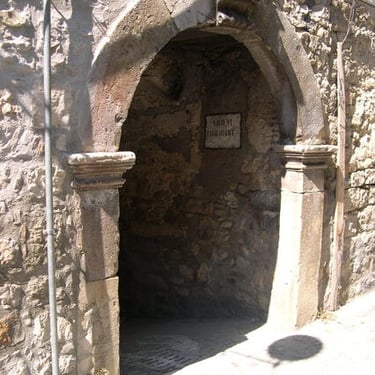
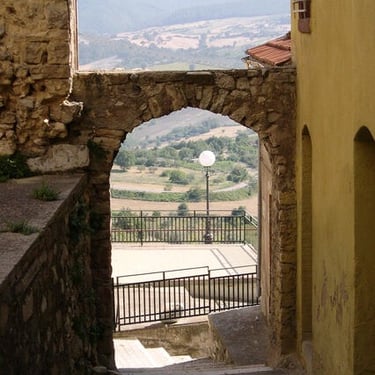
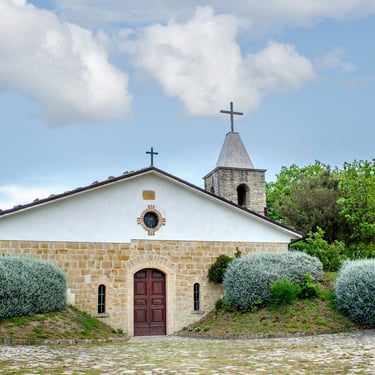
The town is concentrated at an altitude of 546 m on top of a hill overlooking the Trigno river valley to the west. The view stretches from the Molise mountains to Maiella and, towards the sea, from the Punta Penna lighthouse to the Tremiti Islands and Gargano. The main road of the village, which runs flat from the church to the square, divides the village in two, with alleys branching off on both sides. The ducal palace overlooks the square. On the eastern outskirts of the village is the Chapel of St. Felix, pope and martyr, the patron saint of the village. The church is believed to be very ancient, and the Hebrew inscription currently placed on the arch of the portal has always aroused great interest. A third church, the Madonna del Castello, is located in the territory, in Castellelce, on a wooded hill on the Trigno river. The church was built in the early 1900s on the ruins of a medieval castle dating back to the 10th century and was consecrated in 1921. It is semi-underground and can be accessed by descending a staircase. The castle is said to have been founded by people from Termoli and belonged to the monastery of Montecassino. It is a traditional destination for trips and picnics.
Associazione Culturale Comunità Croata del Molise “Luigi Zara”
ass.croataluigizara@gmail.com
+39 0874 874520
C.F. 92048440702